

This article is part of our 6 part series on back pain. Download the complete eBook for FREE here.
The Side Plank is a beginner-friendly exercise that enhances core strength, particularly in the obliques, and contributes to lower back pain relief by promoting stability.
Benefits of the Side Plank:
- The Side Plank strengthens the oblique muscles, gluteus medius and quadratus lumborum and enhances core stability, reducing the risk of back pain.
- It encourages proper posture and spinal alignment by strengthening the lateral muscles of the torso — an important foundation for injury rehabilitation.
How to perform the Side Plank – Instructions:
Step 1: Starting Position
- Lie on your side with your legs straight, feet stacked on top of each
other. - Place your elbow directly beneath your shoulder.
- Keep your body in a straight line from head to heels.
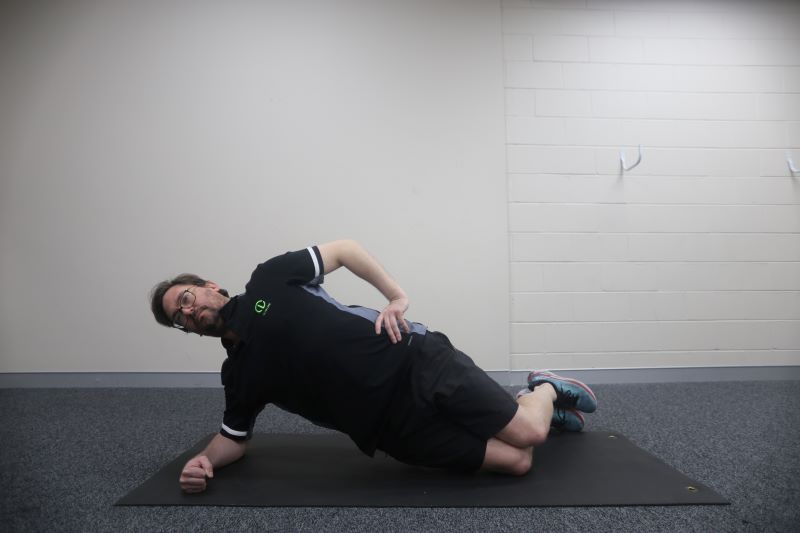
Step 2: Engage Your Core
- Tighten your core muscles and focus on maintaining a straight, stable body position.
Step 3: Perform the Exercise
- Lift your hips off the ground, keeping your body in a straight line.
- Hold this position with your weight supported by your elbow and the side of your bottom foot.
- Focus on balance and stability.
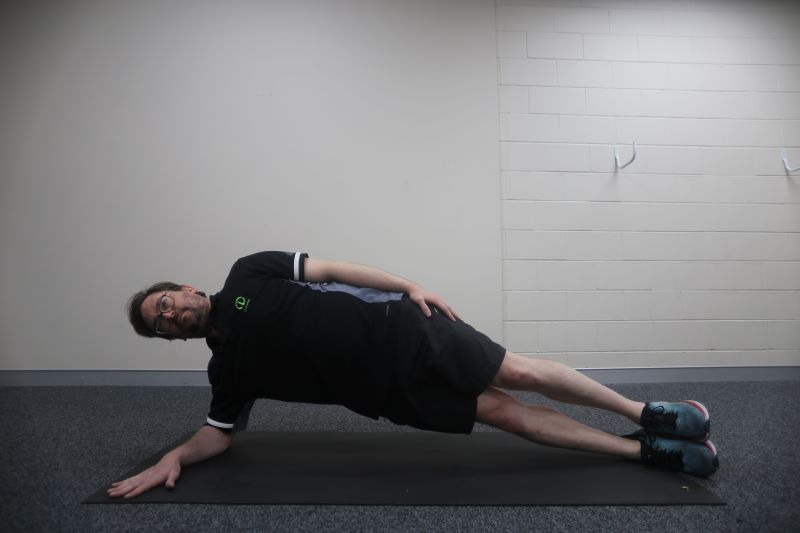
Side Plank Sets & Reps
- For beginners, start with 2 sets of 15-20 seconds on each side.
- Gradually increase the duration of your holds as your strength improves.
Tips & Form
- Maintain a straight line from your head to your heels. Avoid letting your hips sag or pushing them too high.
- Keep your core engaged throughout the exercise.
- Breathe steadily and focus on balance and control.
Frequently Asked Questions
Q: Is the side plank good for lower back pain?
Yes — when performed correctly, the side plank strengthens the obliques, gluteus medius, and quadratus lumborum. These muscles support the spine laterally and help reduce load on the lower back during everyday movement. It’s one of the exercises we use regularly at EP360 Exercise Physiology with clients managing lower back pain in the Inner West.
Q: How long should I hold a side plank if I have back pain?
If you’re new to the exercise or managing back pain, start with 2 sets of 15–20 seconds on each side. Focus on maintaining good form rather than increasing duration. As your strength and stability improve, you can gradually extend the hold time. If you experience any pain during the exercise, stop and consult an accredited exercise physiologist.
Q: What muscles does the side plank work?
The side plank primarily targets the obliques (the muscles along the sides of your abdomen), the gluteus medius, and the quadratus lumborum — a deep muscle in the lower back. Together, these muscles provide lateral stability to the spine, which is key for reducing and preventing lower back pain.
Q: Can I do the side plank if I have a bad back?
For many people with lower back pain, the side plank is a safe and effective exercise — but it depends on the cause and severity of your condition. If you’re unsure, it’s worth speaking with an accredited exercise physiologist before starting. At EP360 Exercise Physiology, we can assess your situation and recommend exercises that are appropriate for you specifically.
If your back pain is related to a chronic condition, you may be eligible to see us under a Medicare care plan — ask your GP for a referral.
This information is general in nature and does not replace personalised advice from a qualified health professional.