
Your GP mentions an exercise physiologist, and you nod along. Then you wonder what that person actually does, and whether it differs from a physio or a personal trainer. If that sounds familiar, you’re far from alone.
So, what is an exercise physiologist?
In short, it’s a university-qualified health professional who uses exercise as part of your care. They can help people manage a health condition, recover from injury, or feel more confident moving. This guide explains what they do, who they help, and how to see one.
What Is an Exercise Physiologist, in Plain Words?
Exercise physiologists belong to a group called allied health. That group also includes physiotherapists, dietitians, and podiatrists. According to Healthdirect, they create and manage exercise programs for people with physical and mental health conditions, injuries, and disability.
People often ask a second question: what is exercise physiology? It’s the use of safe, planned exercise to help people with health conditions, injuries, or disability. You’ll often see the title “accredited exercise physiologist”, or AEP. Accredited means they meet the standards set by Exercise & Sports Science Australia (ESSA). ESSA is the national body that accredits the profession.
How Does Someone Become an Accredited Exercise Physiologist?
The training is serious, which is why the title matters. To gain accreditation, a person must complete at least four years of university study in an ESSA-approved course. They must also log 360 hours of practical experience. That experience is with clients who have clinical conditions, such as heart, lung, or muscle and joint problems.
Training doesn’t stop after graduation. To stay accredited, they must hold first aid and CPR certificates and professional indemnity insurance. They also complete 20 points of yearly training. They must follow ESSA’s code of conduct too.
What Does an Exercise Physiologist Do?
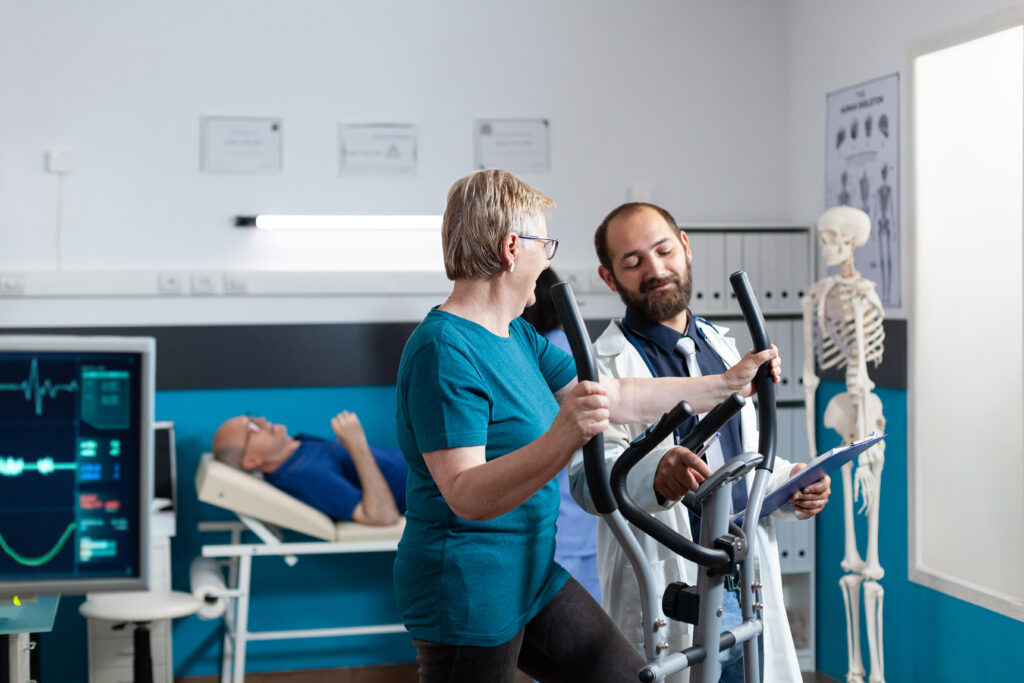
In short, they build a safe, personal exercise plan around you and help you stay engaged with it. Healthdirect describes four parts to a typical appointment:
- Assessment. They check how you move, look at your symptoms, and talk through your health history.
- A personalised program. The plan matches your abilities and health needs, and they make sure the exercises are safe for you.
- Support and education. They explain how exercise can support your physical and mental health, and they coach you along the way.
- Care that fits your life. They work with you on your needs and goals. Some also offer home visits, virtual sessions, or group programs.
It’s not a generic handout. It’s a plan built around your body, your goals, and your pace. Exercise isn’t a cure, and results vary from person to person. Still, a well-matched plan can support you to manage your condition and keep doing the things that matter to you.
At EP360, sessions take place inside Club Lime gyms at St Peters and Five Dock. That gives you full commercial gym equipment to work with.
Why Does Exercise Matter for Your Health?
Regular activity offers real health benefits. The Department of Health says it lowers the risk of many health problems. These include heart and blood vessel disease, type 2 diabetes, anxiety, depression, and muscle and joint problems.
For adults aged 18 to 64, national guidelines suggest 150 to 300 minutes of moderate activity each week. The other option is 75 to 150 minutes of vigorous activity. They also recommend muscle-strengthening activities on at least two days each week.
Those numbers can feel out of reach if you live with pain, fatigue, or a health condition. The guidelines say some activity is better than none. They also say people new to exercise should start gently and build up.
If you’re unsure, they suggest talking to a health professional. An exercise physiologist can turn those general guidelines into a plan that suits your body.
Who Can an Exercise Physiologist Help?
Healthdirect says anyone can see one. You may see one if you have a health problem such as:
- Heart disease
- Lung problems
- Diabetes
- Arthritis
- Osteoporosis
- Mental health issues, such as depression or anxiety
You may also go to build strength before or after surgery. Others want to start exercising, or to stay mobile and independent.
These conditions are common. In 2022, 49.9% of Australians had at least one chronic condition, the Australian Bureau of Statistics found. Back problems (15.7%) and arthritis (14.5%) were among the most common.
That’s why our team supports people with lower back pain, osteoporosis, diabetes, and many other conditions. If you’re over 50, we also run Senior Group Strength Classes at St Peters and Five Dock.
How Is an Exercise Physiologist Different From a Physio or Personal Trainer?
These three roles overlap, so the confusion is understandable. Each has its own focus, and your GP can help you decide where to start.
Exercise Physiologist vs Physiotherapist
Both professions help people through exercise, but Healthdirect says their focus differs. Exercise physiologists help people manage long-term health problems through exercise. They also support lifestyle changes. Physiotherapists focus more on diagnosing and treating injuries, mainly in the early stages. They use hands-on techniques, education, and exercise. If you have a new injury you can’t explain, check in with your GP first.
Exercise Physiologist vs Personal Trainer
Tasmania’s Department of Health says registered exercise professionals, like personal trainers, work with people at low or moderate risk. They can also work with higher-risk people. This needs a stable condition and input from a doctor or allied health professional.
Exercise physiologists focus on exercise and behaviour change programs to prevent or manage illness and injury. They also complete the clinical training described above. If you live with a health condition, your GP can help you choose.
Is Exercise Physiology Covered by Medicare?
It can be. Healthdirect says you don’t need a referral to see one. Without one, you may pay the full cost yourself. A GP referral is what opens the door to Medicare help.
If you have a chronic condition, your GP may prepare a GP chronic condition management plan. You may still hear this called an EPC referral or a chronic disease management plan. If the plan includes exercise physiology, Medicare may help with up to five allied health services each calendar year. The five can be with one type of professional or shared across several.
Private health insurance can also help, depending on your plan. Fees apply at EP360, and rebates may cover part of the cost. Rebate eligibility depends on your individual health fund, level of cover and Medicare circumstances.
We recommend checking with your provider directly. For more detail, see our guide to Medicare rebates for exercise physiology.
Other funding pathways exist too. We’re a registered National Disability Insurance Scheme (NDIS) provider. We work with plan-managed, self-managed, and agency-managed participants. Exercise physiology is generally funded under Improved Health and Wellbeing or Improved Daily Living. We can help you understand which category applies.
Our NDIS exercise physiologist page explains more.
We also work with Department of Veterans’ Affairs (DVA), workers’ compensation, and Compulsory Third Party (CTP) clients. You can read about our DVA exercise physiologist and workers compensation and CTP services.
What to Expect at Your First Appointment
A first visit is mostly about getting to know you. At EP360, the initial consult is a chance to talk about where you’re at in your health journey. We then build a plan around your needs. Healthdirect says an exercise physiologist starts by checking your physical condition. They also talk through your health history and current problems.
Bring your GP referral if you have one, and tell us about any worries before you start. Sessions at EP360 run for 30, 45, or 60 minutes, depending on what you’re working on.
It also helps to come with questions. Healthdirect suggests asking things like:
- Which exercises suit my health condition?
- How often should I exercise?
- Do I need special equipment, and how do I use it safely?
- How will we track my progress?
Our team is happy to talk through any of these with you.
When to See Your GP First
An exercise physiologist doesn’t replace your GP. Speak to your GP before booking if you have new, unexplained, or worsening symptoms, or a new injury. Your GP can also tell you whether a GP chronic condition management plan suits you.
If you’re unsure what to do, you can call the Healthdirect helpline on 1800 022 222. A registered nurse is available 24 hours a day, 7 days a week.
Some symptoms need urgent help. Call 000 and ask for an ambulance if you notice warning signs of a heart attack. The Heart Foundation lists chest pain, arm or shoulder pain, and shortness of breath as common signs. Some people also feel sick, sweaty, or dizzy, or have pain in the back, neck, or jaw.
How EP360 Can Help You Move with More Confidence
We’ve covered what an exercise physiologist does, who they help, and how funding may work. If you’re still asking, “What is an exercise physiologist, and could one help me?”, the short answer is this. They use exercise to build a plan around your health, goals, and pace.
Our Chronic Disease Management and Care Plans service supports people living with an ongoing health condition. Our team at EP360 offers exercise physiology for clients in St Peters and Five Dock, inside Club Lime gyms.
When you’re ready, you can contact us to book a session or call (02) 8070 8367.
Frequently Asked Questions
Do I Need to Be Fit Before I See an Exercise Physiologist?
No. Healthdirect says you can see an exercise physiologist to start exercising or build strength and fitness. You can also go if you have a health condition. Your plan is matched to your abilities and health needs, so it starts at a level that suits you. Our team has worked with people aged 12 to 105. We’re happy to talk through any worries before your first visit.
What If Exercise Makes My Pain Worse?
Tell your exercise physiologist, because keeping exercises safe for you is part of their role. Healthdirect suggests asking what to do if you feel pain during or after exercise. That makes it a normal thing to raise early. We’ll talk it through with you. If the pain is new, severe, or doesn’t settle, speak to your GP.
Can an Exercise Physiologist Help If I Have More Than One Health Condition?
Many people with a chronic condition have more than one at the same time, says the Australian Bureau of Statistics. Your exercise physiologist builds your plan around your abilities and health needs. Share your full health history at your first visit. It also helps to let your GP know about your plan.
How Many Sessions Will I Need?
There’s no single answer, because it depends on your health, goals, and how you respond. Healthdirect suggests asking how many sessions you’ll need. It’s worth raising at your first visit. You can then talk it through after your assessment. Your needs can change over time, so it’s fine to ask again later.
How Do I Find an Exercise Physiologist Near Me?
You can search ESSA’s find an accredited exercise physiologist tool, and your GP can refer you to one too. If you’re looking for an exercise physiologist in Sydney’s Inner West, EP360 has two clinics. They’re in St Peters and Five Dock. Both sit inside Club Lime gyms, with full commercial gym equipment to work with.